
Ice Dams in Minnesota: Causes, Prevention, and When to Call a Roofer
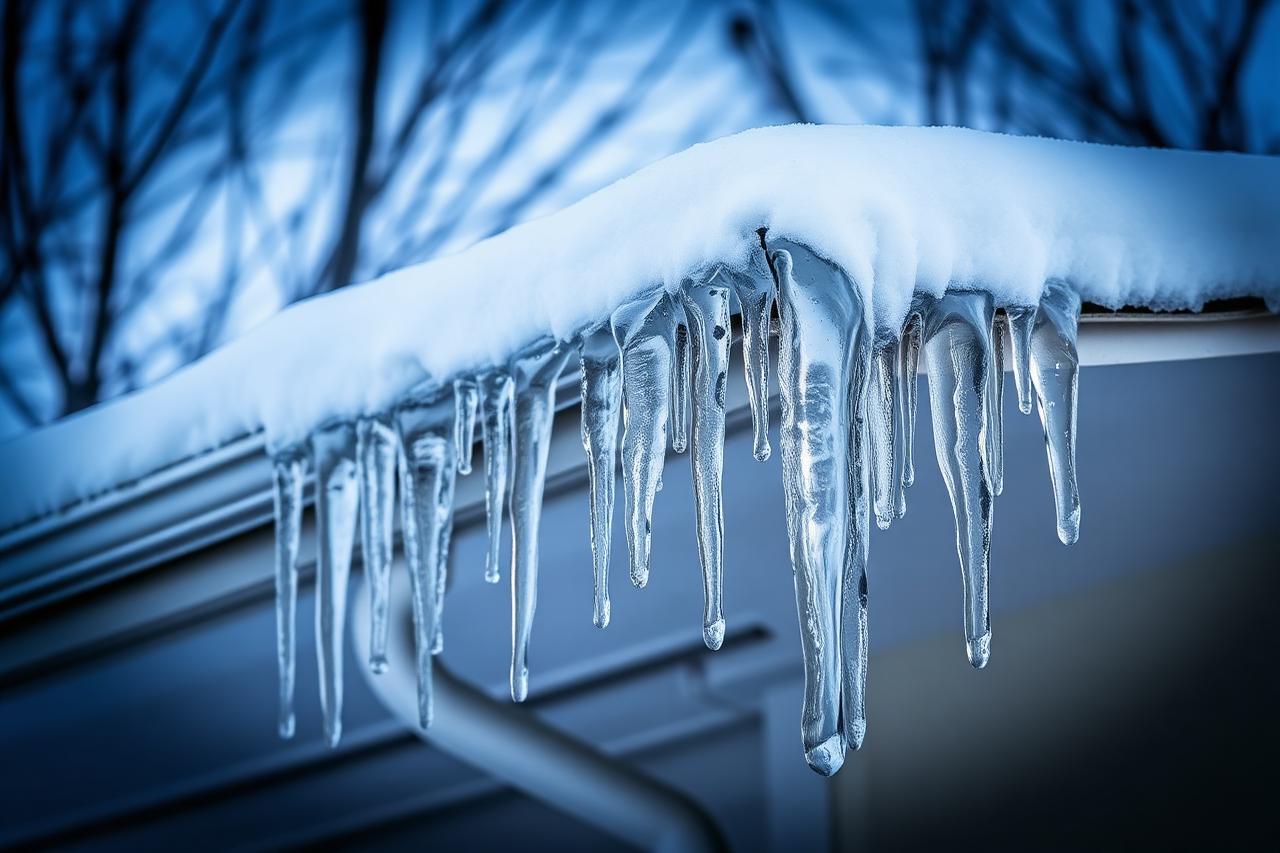
Every February, homeowners across Minnetonka, Edina, and Golden Valley end up on a ladder with a hammer, chipping at ice along the eaves. It rarely works and often makes things worse. The real fix is understanding why the ice formed in the first place.
How an ice dam actually forms
Heat escaping from your living space warms the roof deck. Snow on that warm section melts, even when it's well below freezing outside. The water runs down the slope until it reaches the eave — which is cold, because there's no heated space beneath it — and refreezes there.
Repeat that cycle for a few days and you build a ridge of ice. Meltwater then pools behind the dam and, because shingles are designed to shed running water rather than resist standing water, it works its way under the courses and into your house.
Signs water is already getting in
- Water stains or bubbling paint on ceilings near exterior walls.
- Damp insulation at the attic eaves.
- Icicles forming behind the gutter, not just from it.
- Frost accumulating on nail heads or roof sheathing in the attic.
- Interior condensation on windows near the top floor.
The three real fixes
1. Air sealing
The most effective and most overlooked step. Recessed lights, bath fans, attic hatches, plumbing stacks, and top plates all leak warm indoor air into the attic. Sealing those penetrations keeps the heat where you paid to put it.
2. Insulation
Many older homes in the west metro have thin or compressed attic insulation, especially out at the eaves where it's hardest to install. Bringing depth up to current recommendations keeps the roof deck cold and uniform.
3. Ventilation
Balanced intake at the soffits and exhaust at the ridge flushes warm air out before it can melt snow. Ventilation only works when intake isn't blocked — insulation stuffed into the soffit is one of the most common problems we find.
What roofing materials can and can't do
No roof covering prevents ice dams. What a properly built roof does is prevent damage when a dam forms: ice-and-water membrane at the eaves and valleys gives you a waterproof layer where standing water is most likely.
Metal roofing sheds snow rather than holding it, which reduces the fuel for a dam. Heat cable can manage a chronic problem spot, but it's a symptom treatment — it costs energy and doesn't fix the heat loss causing the melt.
Safe things to do this winter
- Rake snow off the lower few feet of the roof from the ground, before it melts and refreezes.
- Keep gutters and downspouts clear in fall so meltwater has somewhere to go.
- Run bathroom and kitchen fans so they vent outside the house, never into the attic.
- Hire steam removal for existing dams — steam melts ice without damaging shingles.
Do not use a hammer, ice pick, salt tablets, or a propane torch. Every one of those will cost you shingles, gutters, or worse.
When to call a roofer
Call when you see interior staining, when ice dams return every single winter, when shingles at the eave look lifted or missing after a thaw, or when the attic is wet or frosty. Those are structural symptoms, not weather annoyances.
We inspect ventilation and insulation as part of the roof, not as an afterthought — because a new roof over an under-vented attic will have the same problem next January.
Fix the cause before next winter
The best time to solve ice dams is a warm month. Read more about our roof replacement and repair work, or call Rocket Roofing at 952.649.6449 for a fast quote. Serving Minnetonka, Edina, Golden Valley, and the surrounding metro with a satisfaction guarantee behind every job.
Ready for a straight answer?
Rocket Roofing inspects first, documents with photos, and backs every job with our satisfaction guarantee. High standards, higher quality.